The European Commission and NATO joining together to back a worldwide online brainstorm called the Security Jam. The Jam will be held online between February 4th and 9th 2010. The initiative is co-organised by a group of leading think-tanks. It is designed to allow selected VIPs and participants from around the globe take part in an online debate on key issues that govern our safety and development. Chairman of European Union Military Committee, Paris Bureau Chief of the New York Times, Chairman of the NATO Military Committee, Executive Director of Human Rights Watch, Executive Director of United Nations World Food Programme, NATO Assistant Secretary General for Public Diplomacy are some of the VIP panelists for this online session.
President BIPSS, Major General ANM Muniruzzaman, ndc, psc, (Retd.), is also invited by the organisers as VIP panelist to take part in the online debate. It is an important opportunity for all stakeholders and interested parties to make their voice heard. Interested individuals can register at www.securityjam.org beforehand to participate in the debate.
We are currently at a very critical juncture of history. The rise of China coincides with the evolving nature of South Asia’s geopolitics and its internal dynamics. Despite the global financial crisis, China has been able to maintain its economic growth momentum. The phenomenal and robust growth has given China a strong economy. South Asia is also in transition- India is rising, Indo-Pak rift still continues, fight against terrorism in Afghanistan and Pakistan is on. At the same time, Sino-South Asian exchanges are seemingly at an all-time-peak now. Sino-South Asia relations and the changing contours depend much on South Asia’s internal dynamics. In light of the stated premise, it is very important to study and analyse China’s relations with major South Asian countries. This brief is aimed at illustrating China’s political, economic and defence cooperation with four South Asian countries- Bangladesh, India, Myanmar and Pakistan.
In the backdrop of emergence of Terrorism as one of the most critical challenges facing the national security apparatus of most countries in the world today, Bangladesh Institute of Peace and Security Studies (BIPSS) will hold a five-day long international workshop on Counter Terrorism Capacity Building (CTCB) from March 21-25, 2010, at Dhaka Sheraton Hotel.
The workshop will be the second of a series supported by the British High Commission, Dhaka. The workshop offers rigorous training packages aiming at bolstering the capacity of the people at various levels engaged in the business of countering terrorism in Bangladesh.
Bangladesh Institute of Peace and Security Studies (BIPSS) and Strategic Foresight Group (SFG), India, organised the Second International Workshop on Himalayan Sub-regional Cooperation for Water Security in Dhaka on 15-16 January, 2010. This is part of a long-term process to build confidence and cooperation between countries that make up the Himalayan River Basins.
This process is supported by the John D. and Catherine T. MacArthur Foundation, USA.
25 distinguished water experts from India, Bangladesh, China and Nepal, including former ministers of Water Resources of India, Bangladesh and Nepal participated in the Workshop.
President BIPSS’ commentary on Indo- Bangladesh relations and its strategic implications
The recent Indo-Bangladesh summit has brought about a number of significant changes in the relations between the two countries in terms of cooperation level. Some of these developments also involve regional and strategic implications. President BIPSS in his commentary published on 27 January, 2010, in the Bengali weekly newspaper- Weekly Budhbar- has outlined those implications.
BIPSS joins the Network of the Think Tank of the Islamic Countries
BIPSS has joined a newly formed Network of the Think Tanks of the Islamic countries. Prominent Think Tanks from all most all the Islamic countries have become member of this network. The formal announcement of the launching of the Network will be made through a large International Conference in Istanbul, Turkey in January, 2010. The Turkish President will inaugurate the Conference and the heads of the member Think Tanks and academics of the Islamic countries will be attending the events. President BIPSS, Major General ANM Muniruzzman (Retd.) has left for Istanbul to attend the meeting. He will chair a session and will also deliver a talk on conflict resolution during the conference.
A new network of Think Tanks has been formed to work with the children born out of war- one of the many facets of conflict and its impact on the society. Children born out of war are viewed with suspicion and fear in the society and they face serious problems in terms of social integration. BIPSS has joined the network and the network, based in Germany, will address the challenges faced by children born of war- including sexual violence inflicted by law enforcement agencies and Peace Keepers.
BIPSS President Speaks on "Enhancing Soldier C4I Capability" in Singapore
Modern battle space management with retaining the optimal effectiveness of the forces has become an issue of serious concern among the modern Army today. Considering the future warfare will be digitised in which mere execution of programmes within the functional stovepipes of C2 will not able to meet the mission requirements of the future warfare; the Command, Control, Communications, Computers, and Intelligence (C4I) has been added in the defense strategy of many militarily developed countries. It is within this context an international conference will be held in Singapore on February 2010. Major General ANM Muniruzzaman, President, Bangladesh Institute of Peace and Security Studies (BIPSS) shall be presenting on “Improving Situational Awareness of the Battlefield to Enhance Soldier C4I Capability” at the conference.
Indo-Bangladesh Summit: A Security Agenda for Bangladesh
Due to reasons of security and geography, the relationship with India is critically important for Bangladesh. The forthcoming Prime Ministerial meeting between Bangladesh and India is a significant one in this changing milieu of emerging perspectives in Bangladesh-India relations. Security is the most prominent item on India’s agenda for this meeting. A number of security issues exist between the two countries; among them the maritime demarcation, environment/water security, border issues & Indian Border Security Force’s (BSF) killing of innocent civilians, human insecurity in unsettled enclaves, gross imbalance in trade, disparity in sharing information, transnational security threats and the issue of militancy and terrorism have become more prominent. In the context of contiguity of borders and evolving nature of threats from within and outside South Asia, the area of potential cooperation on security issues is much broader. While it is important to understand and appreciate India’s security concerns, similar concerns by Bangladesh also need to be brought to the forefront.
Trans-boundary collaboration over the issue of shared water is critical since water is scarce in most areas. In this backdrop,BIPSS hosted the Second International Workshop on “Himalayan Sub-regional Cooperation for Water Security” in Dhaka on January15-16, 2010 in collaboration with the Strategic Foresight Group, India. BIPSS President Major General Muniruzzaman (retd) and President of Strategic Foresight Group, India, Sundeep Waslekar addressed the inaugural session of the workshop. The workshop, attended by 25 experts from China, Nepal, India and Bangladesh, stressed that water has become a crisis issue for people of the subcontinent. It also underscored the need for securing equal interests of all basin countries, especially the lower river nations. The workshop concluded with a declaration named “Dhaka Declaration on Water Security” which recognised the critical significance for water security of the Himalayan River Basin and put forward a set of recommendations towards this end.
Major International Organisations discuss Security Implications of Climate Change in Copenhagen
A major COP-15 event titled "Climate Change and International Security (CCIS)", was organised by the Danish Ministry of Foreign Affairs (MFA) on 15 December, 2009. The speakers in this special event included the NATO Secretary General, European Union President, Administrator of UNDP, President of the African Union and President BIPSS, Major General A N M Muniruzzaman, ndc, psc (Retd).
_
The speakers dwelt at length about the various security challenges posed by Climate Change and its implications on the international security order. General Munir was specially invited by the Danish MFA to present a viewpoint on the security dimensions of Climate Change and also the Bangladesh perspective.
President BIPSS, Major General Muniruzzaman (Retd) met a number of reporters from different print and electronic media organisations on Saturday, 26 December 2009 to provide a post Copenhagen perspective on Climate Change issues. General Munir specifically highlighted the security dimensions of Climate Change and its implications for Bangladesh. He spoke on the outcome of the conference especially in relation to Climate Security issues. Moreover, he also highlighted some of the other challenges faced by Bangladesh from the melting of the Himalayan glaciers. General Munir mentioned that Bangladesh could play a lead role in highlighting the problems and vulnerabilities of the Deltaic states.
He further mentioned that Bangladesh also needs to play an enhanced role in mainstreaming the issue of Climate Change induced displacement in the international community. The press briefing was held at the BIPSS conference room.
In the backdrop of the growing threat of terrorism and violent extremism in Bangladesh, Bangladesh Institute of Peace and Security Studies (BIPSS) supported by the British High Commission, Dhaka, organised a week-long international workshop titled “Counter Terrorism Capacity Building (CTCB)” on 6-10 December 2009 at Dhaka Sheraton Hotel. The workshop brought together participants from a multitude of different organisations encompassing armed forces, law enforcement agencies, concerned ministries, financial institutions, media, academia, intelligence, civil society organisations etc. Several internationally established resource-persons, 'Dr. S. Mahmud Ali, Former Senior Editorial Coordinator (Asia-Pacific) of the BBC World Service; Dr. John Harrison, Assistant Professor and Head of Terrorism Research, ICPVTR,
Singapore; Mr. Jay Jhaveri, Head, World Check – Asia; renowned Jurist Barrister Tania Amir and Mr. Shafqat Munir, Research Analyst, ICPVTR, Singapore, whose expertise covered key aspects of the study of terrorism, violent extremism, and counter-terrorist operations, were invited by BIPSS to serve on the workshop's faculty. Read More...
The
first BIPSS-YDRC Yunnan Bangladesh Cooperation
Dialogue was held in Kunming, China on
15 October, 2009. BIPSS and Yunnan Development
Research Centre (YDRC) of the Provincial
Government sponsored the dialogue and
it was attended by four member BIPSS delegation
led by President BIPSS, Major General
ANM Muniruzzaman (Retd.), scholars and
government officials from YDRC, Foreign
Affairs Office, Commercial Department,
Communication and Transportation Department,
Education Department, Tourism Administration,
Cultural Department and Yunnan University.
Based
on “Strengthening Bilateral Interaction
and Promoting Pragmatic Cooperation in
All-around Way”, the attendees conducted
detailed discussion on various issues
ranging from communication, business,
education, culture, tourism etc. The meeting
was concluded by the joint declaration
of “Kunming Statement”. On
16 October, 2009, BIPSS delegation held
an important meeting with the Senior Officials
of the Yunnan Provincial Government to
discuss mutual and bilateral issues. Later,
at the Provincial Government’s Office,
BIPSS and YDRC signed an institutional
agreement to further the existing collaboration
and cooperation. Read
‘Kunming Statement’
Bangladesh Institute of Peace & Security Studies (BIPSS) organised a Roundtable session on ‘Understanding Aviation Security’ on last 7 December, 2009 at Dhaka Sheraton Hotel, highlighting all aspects of Aviation Security for countering present and future challenges in this field with a special attention to future proactive strategy needed to counter potential threats . The session was attended by subject specialist, experts, and concerned stakeholders.
Roundtable on ‘Sino-US Relationship: Emerging Trends & Possibilities’
Bangladesh Institute of Peace & Security Studies (BIPSS) organised a Roundtable on ‘Sino-US Relationship: Emerging Trends & Possibilities’ on last 6 December, 2009 at Dhaka Sheraton Hotel. The roundtable was organised under the auspices of Bangladesh Centre for China Studies (BCCS), a specialised centre of BIPSS. The session was attended by subject specialists, experts and concerned stakeholders
The
latest edition of Peace and
Security Review (Second Quarter,
2009) has been published. Both nationally
and internationally renowned scholars,
academicians and policy makers have
contributed in the current volume
of this journal.
Bangladesh Centre for China Studies (BCCS) formally launched
BIPSS formally launched Bangladesh Centre for China Studies (BCCS) in Dhaka on 7 December, 2009. President BIPSS, Major General Muniruzzaman (Retd.) made the formal announcement at a reception organised to mark the occasion. The guests included diplomats, policy makers, journalists, academics and senior government officials. The Chinese Ambassador to Bangladesh, H.E. Zhang Xianyi, and Advisor BCCS, Mr. Enayetullah Khan also spoke on the occasion. The new centre will have a dedicated group of researchers who will undertake research on various aspects related to China and Sino-Bangla relations.
President BIPSS speaks at the World Security Conference
President BIPSS, Major General ANM Muniruzzaman (Retd.), is going to attend and speak at East West Institute’s 7th World Security Conference in Brussels in February, 2010. This is a major International Conference. The conference will highlight and address critical security challenges facing the world today. Selected, high profile speakers were invited by the organisers to speak at this conference.
President BIPSS, Major General Muniruzzaman, ndc, psc (Retd) will be addressing the Beijing Forum 2009. The Beijing Forum is a gathering of eminent policy planners and specialists of current issues of global concern. It is jointly organised by the Peking University. This year’s Beijing Forum is especially important as it takes place amidst the global financial crisis, a topic which will receive particular attention during the forum. General Munir will also be meeting heads of other think tanks and other eminent participants in the sidelines of the event. He will present on ‘Global Financial Crisis and China’s Responsibilities’. He will also be interviewed by China Financial Herald on these issues.
President BIPSS, Major General Muniruzzaman, was invited to address the Beijing Forum in November, 2009. During his visit to China he was interviewed by the influential newspaper, the Global Times. He talked about a host of issues during the interview, starting from US policy towards China, Sino-Bangladesh relations to the possibility of forming G2 and its global implications. The interview was published in The Global Times on 13 November, 2009.
Statement Released by Military Advisory Council on Climate Change
The Military Advisory Council on Climate Change (MAC) has released an official statement calling on governments to pay especial emphasis to the security dimensions of Climate Change. The statement was drafted during the recent MAC meeting in Brussels and Genval, Belgium. It may be mentioned that, MAC is a group of twelve senior Military Flag officers drawn from around the world who work especially on the aspects of security dimensions of Climate Change and will also have an advisory in the forthcoming Copenhagen Summit. The statement was released at a joint event of MAC and Brookings Institution in Washington D.C., USA on 29 October 2009. The MAC initiative is also supported by a number of notable international think tanks such as Brookings Institution, Chatham House, Center for Naval Analyses, International Institute of Strategic Studies, Institute of Environmental Security, Woodrow Wilson Centre and BIPSS among others.
President BIPSS interviewed by Al Jazeera on BD-Myanmar tension
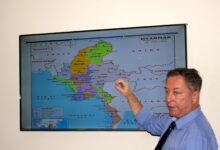
Amid growing tensions between Bangladesh and Myanmar over maritime boundary and Rohingya refugee issues, Myanmar Government is going ahead with its plan to erect fence across the Naf river. So far they have fenced off 70km of border. Security analysts believe that the fencing may further aggravate the already unstable Bangladesh- Myanmar relations. Al Jazeera on October 27, 2009 ran a story on this issue. While talking to Nicholas Haque, Al Jazeera’s reporter, President BIPSS Major General ANM Muniruzzaman said, "The tension was heightened last November when the Myanmar Navy came in to put a rig in what Bangladesh claims, rightly, to be our own territorial water."
President
BIPSS Joins International Military
Advisory Council on Climate
Change and Security
President
BIPSS Major General Muniruzzaman
(retd.) has joined The International
Military Advisory Council
(MAC) on “Climate Change
and The Military: Copenhagen
and Beyond”, as part
of the program on Climate
Change and International Security
(CCIS).
The formation of the Military
Advisory Council (MAC) was
initiated by Institute of
Environmental Security (IES)
based in The Hague and is
partnered with Chathan House
(UK), IUCN, Brooking Institution
(USA), Woodrow Wilson International
Center(USA) and others. The
group brings together eminent
scholars/experts selected
from around the world to work
on the critical area of climate
security and address a number
of major issues associated
with it. One of the initial
main areas of work will be
to consolidate and analyse
the research findings on the
impact of climate change on
global security and make a
statement/recommendation to
the climate negotiators in
the Copenhagen Summit in December
2009.
Climate
change is increasingly recognized
as a major human security issue
that poses serious global threats.
Events like weather-related disasters,
desertification and rising sea level,
exacerbated by climate change, affect
individuals and communities around
the world. Climate change reduces
access to fresh and safe drinking
water, negatively affects health
and poses a real threat to food
security in many countries of the
world. It is a contributing factor
to poverty, and forces people from
their homes, sometimes permanently.
However, climate change can heighten
existing social and political tensions
or can lead to new ones. Dramatic
environmental change undeniably
places the infrastructure of all
countries to test. But it poses
an ever greater threat to developing
countries that lack the means, the
know-how and the capacity to effectively
deal with these phenomena. Impacts
of global warming and climate change
thus have the potential to challenge
our development efforts, human security
and the future. Read more ...
The
region of South Asia
is densely populated
and natural resource
constraints, especially
water resource, will
pose severe security
threats to the states.
This may eventually
lead to conflict in
the region.
In
light of the above,
Bangladesh Institute
of Peace and Security
Studies (BIPSS) organised
a seminar on “Water
Security of Bangladesh”
on 13 July, 2009 at
CIRDAP Auditorium. Prominent
water experts of the
country- Dr. Atiq Rahman,
Mr. Mahfuz Ullah and
Coloner Mahmudur Rahman
Chowdhury (Retd.)- presented
papers at the seminar.
The seminar was presided
over by President BIPSS,
Major General ANM Muniruzzaman
(Retd.)
The
event was largely attended
by foreign diplomats
in Bangladesh, politicians,
academicians, members
of the civil society,
researchers and journalists.
Click
the links below to download
Seminar Papers and Power
Point Presentation.
BIPSS
President Speaks at Climate Change
Conference in WashingtonDC
President
BIPSS, Major General ANM Muniruzzaman
(Retd.) delivered a lecture at the
first Conference of the International
Institute for Strategic Studies
(IISS-US) Transatlantic Dialogue
on Climate Change and Security.
The conference commenced on 5 May,
2009 in Washington DC. General Munir
spoke on “Managing Climate-induced
State Threatening Crises”.
His co-panelists were Brigadier
general Nigel Hall (Retd.), Senior
Associate Fellow, Defence Academy
of the UK and Dr. Kent Butts, Director,
National Security Issue Group, US
Army War College. His lecture was
followed by a panel discussion participated
by security analysts, academics
and policy makers from across the
world.
The
Climate Change Cell of Bangladesh
Institute of Peace and Security
Studies organized a Roundtable discussion
on “Climate Change
and Conflict in Bangladesh”, on Thursday, 18 June, 2009
at 11:00 a.m. in the Conference
room of the BIPSS centre.
The
keynote presentation was delivered
by Mr. Matthijs van der Hoorn of
Radboud University Nijmegen, Netherlands.
Mr. Hoorn, during his presentation,
examined the consequences of climate
change that may cause violent conflict
in Bangladesh. He put together academic
debates, empirical and present evidences
of climate change and analyzed the
prevailing social tensions to illustrate
whether the cumulative impact will
lead towards inter/ intra state
conflicts.
The
session was presided over by President
BIPSS, Major General ANM Muniruzzaman
(Retd.) and was attended by professionals
and researchers from INGOs, Think
Tanks and Climate Change watchdog
groups.
The
Key Note Presentation was followed
by a lively question and answer
session and came up with a number
of very good recommendations from
the audience to address the issue
of “Climate change and conflict
in Bangladesh” effectively.
Mr. Hoorn is currently working with
BIPSS in Dhaka on the issues of
security dimensions of climate change
in Bangladesh.
In
the sidelines of the two conferences,
President BIPSS met and interacted with
a number of senior officials and heads
of other institutes from different countries.
General Munir also attended the official
launch of the Asian Security Initiative
in Singapore.
First
Roundtable on Singapore-Bangladesh
relations Held
BIPSS
and Institute of South Asian Studies
(ISAS, Singapore) jointly organized
first roundtable dialogue on Singapore-Bangladesh
Relations on 25 May, 2009 in Singapore.
A
four member delegation from Bangladesh
led by President BIPSS, Major General
ANM Muniruzzaman (Retd.), went to
visit Singapore in the month of
May 2009. The dialogue topics encompassed
a wide range of issues that are
of interest for both the countries;
Singapore and Bangladesh. Both
the institutes presented papers
on domestic economic developments
(of respective countries), regional
security architecture, evolving
regional relations in South and
Southeast Asia and future of regional
groupings in South and Southeast
Asia (SAARC, ASEAN).
The
roundtable dialogue will essentially
play a noteworthy role in strengthening
Singapore-Bangladesh relations and
furthering regional cooperation.
The
first BIPSS-ISAS roundtable
dialogue on Singapore-Bangladesh
Relations will be held in
Singapore on May 25.
Bangladesh
Institute of Peace and Security
Studies (BIPSS) and Institute
of South Asian Studies (ISAS,
Singapore) will jointly organise
the roundtable, said a press
release. Read
more...
Bangladesh Institute of Peace and Security
Studies (BIPSS) becomes the partner
of Shanghai Institutes for International
Studies (SIIS). A five member delegation
from SIIS visited Bangladesh during
4-8 February, ’09 at the invitation
of BIPSS. BIPSS President Major General
Muniruzzaman ndc, psc, (Retd) and SIIS
President Prof.Yang Jiemian singed Memorandum
of Understanding (MoU) at BIPSS office
after an in house discussion on 7th
February, ’09, then exchanged
the documents of the MoU. They hope
to develop the relationship between
the two institutes in the future and
contribute together in the track two
level interaction and thus contribute
to the policy making level.
Major General Muniruzzaman, President
BIPSS, discusses the country's upcoming
elections and the security situation in
the region following the Mumbai attacks.
"Bangladesh at the crossroads:
Democracy, radicalisation and terrorism
amidst the emerging security challenges
of South Asia" President BIPSS,
Major General Muniruzzaman, 4pm, 2nd December
2008 Attlee Suite, Portcullis House, House
of Commons.
BIPSS has become a partner
institution of the Consortium for Countering
the Financing of Terrorism (CCFT). CCFT
is a key forum vigorously engaged in policy
formulation and implementation to counter
money laundering and terrorist financing
in the Asia Pacific region. The consortium
develops public and private sector partnership
with government institutions, financial
industry, research community and other
stakeholders in this regard.
CCFT has established
affiliation with several key institutions
such as Government of Singapore, The Association
of Banks in Singapore, S.Rajaratnam School
for International Studies, Nanyang Technological
University, Singapore, World-Check-UK,
National Defense College of the Philippines
(NDCP) and others.
The inclusion of BIPSS
in CCFT is a major recognition to its
proactive role against terrorist financing.
It is to be added that BIPSS organized
an International Workshop on Countering
the Financing of Terrorism in Dhaka last
August in joint collaboration with CCFT.
BIPSS will also undertake some major activities
in this critical area of counter terrorism
in the near future.
BIPSS President
invited to speak at US Homeland Security
Summit in Hawaii.
BIPSS President Major General ANM Muniruzzaman,
ndc, psc, (Retd.) delivered lecture
at the United States Homeland Security
Summit and Exposition in Hawaii. BIPSS
President was invited to the summit
by the Governor of the State of Hawaii
and The US department of Homeland Security.
The President delivered his talks on
the following theme; Scientific
Research for Homeland Security: Fostering
International Partnerships. The
summit was scheduled to hold on October
8-10, 2008 at the Sheraton Waikiki Hotel,
Hawaii.
The summit offered a rich venue for
leaders from various avenues to interact
with each other and develop strategies
to address shared security challenges
and concerns. This year's summit partnered
with the US Department of Homeland Security,
Science and Technology Directorate.It
provided the attendees with a rare opportunity
of open discussions on rich agenda,
provocative debates and networking.
BIPSS
President speaks at Australian National
University (ANU)
The President of Bangladesh Institute
of Peace and Security Studies (BIPSS),
Major General ANM Muniruzzaman, ndc,
psc, (Retd.) delivered a talk at a roundtable
held at the college of Asia and Pacific
at Australian National University (ANU).
He covered two themes in his delivery
at two different segments. The first
one was on peace building operations
titled “New Dimensions
of Peace Operations” and the second segment was on the Emerging
Security Architecture in South Asia.
Prominent academics, members of the
ministries, faculty, students of ANU
and others participated in the roundtable.
The talk was followed by a lively question-answer
session that brought up many issues
of current concern.
BIPSS signing a MOU with Argentine Council
for Foreign Relations
Driven by the essence of greater inter
regional connectivity for promoting and
reinforcing mutual cooperation, exchange
of information and improvement of research
and academic programmes, Bangladesh Institute
of Peace and Security Studies BIPSS) and
Argentine Council for Foreign Relations
have agreed to sign a Memorandum of Understanding
(MOU). BIPSS President Major General ANM
Muniruzzaman, ndc,psc (Retd.) who is now
engaging in weeks long lecture tour in
Argentina will represent BIPSS at the
signing ceremony. The purpose of the MOU
between the BIPSS and Argentine Council
for Foreign Relations is to improve the
scientific and academic levels of the
two Institutes, to promote and intensify
the friendship and the mutual understanding
between the peoples of the two countries
in general, and the two Institutes in
particular.